Trade Marketing: Aligning National Campaigns with In-Store Execution
In the FMCG sector, maintaining a consistent brand strategy while managing promotional activities across different markets requires effective coordination between headquarters, sales teams and local partners. Custom digital platforms can simplify the management of materials, requests and approvals.
From strategy to execution in the field
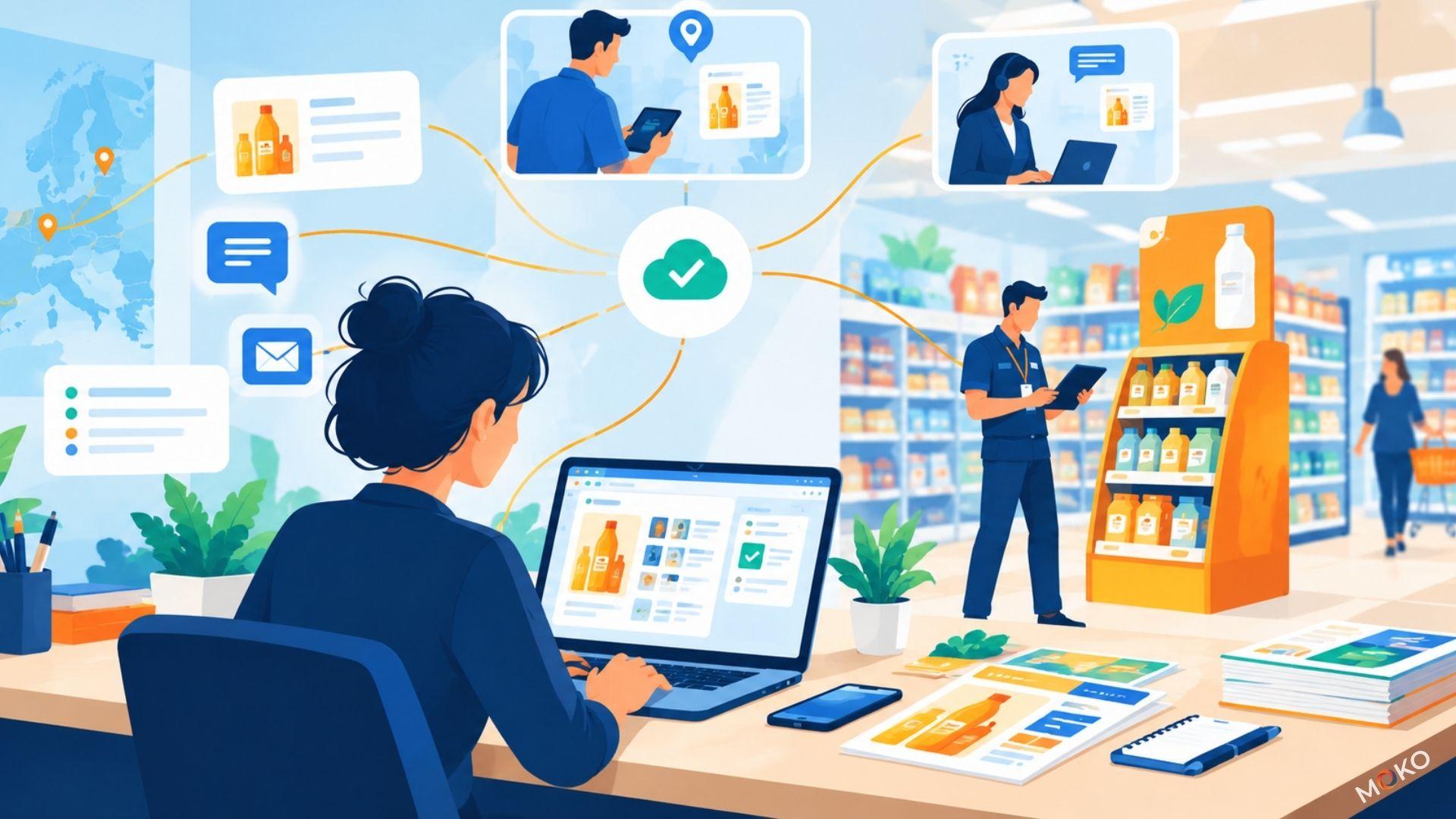
When an FMCG company plans a promotional campaign, headquarters defines the objectives, communication materials, budget and brand guidelines. The next step is to bring that strategy to life in the field, where guidelines must be translated into concrete activities: in-store displays, dedicated promotional stands, marketing materials and initiatives tailored to different markets.
This is where coordination can become complicated. Country teams, regional managers and local partners need to request materials, communicate specific requirements and track the progress of activities, while ensuring that everything remains aligned with the guidelines defined centrally.
When these steps are managed through spreadsheets, email chains and separate archives, retrieving up-to-date information becomes more difficult. Approvals can take longer, requests may overlap, and headquarters can lose visibility over what is happening across different markets.
The challenge therefore affects both day-to-day operations and the ability to ensure that campaigns are implemented according to the agreed guidelines.
The operational challenges of trade marketing
Trade marketing activities often involve people with different responsibilities and tools. The central team needs to maintain control over budgets, materials and brand identity, while local teams need fast, straightforward procedures to respond to retailers' needs.
Fragmented management can lead to recurring issues:
- Requests that are difficult to track. Information arrives through different channels, and reconstructing the status of a request can require repeated exchanges between stakeholders.
- Complex approval processes. Changes to materials, requests that fall outside standard procedures and multiple review rounds can create additional steps and make responsibilities less clear.
- Limited visibility over activities. Headquarters may struggle to obtain an up-to-date overview of incoming requests, committed budgets and completed installations.
- Tools that do not fit field operations. Systems designed for general administrative tasks do not always provide practical workflows for people configuring promotional materials or organising local activations.
Enterprise management systems can play an important role in these processes. However, when their available features do not meet the specific needs of the sales network, dedicated digital tools can help support the operational activities involved.
A custom B2B portal to connect headquarters and local teams
A dedicated trade marketing platform can bring together activities that are currently managed through separate tools.
For example, a B2B portal can allow local teams to browse available materials, submit requests, configure orders according to their needs and track approval status. Headquarters can review incoming requests, apply the relevant rules and monitor progress across different markets.
The specific setup depends on the processes involved, but several features can be particularly useful:
- Digital catalogues and configurators that allow teams to select promotional stands, materials and kits according to the market, retail outlet or type of campaign.
- Request and approval workflows that define responsibilities, approval steps and notifications, reducing manual exchanges.
- Budget and progress tracking to monitor requests and maintain an up-to-date overview of ongoing activities.
- Integration with existing business systems to share relevant information with the applications already in use, limiting duplicate records and manual data entry.
The benefit is not simply bringing several features together in one portal. A solution designed around the actual process makes it possible to establish clear rules, give stakeholders access to the information they need and reduce tasks that currently require manual intervention.
Headquarters can retain control over brand guidelines and approvals, while local teams manage their activities through clearly defined procedures and tools suited to their day-to-day work.
A platform tailored to business processes
Every company has different requirements. In some organisations, the main challenge is managing promotional materials; in others, it is coordinating requests, monitoring budgets or collecting information from different markets.
For this reason, before choosing a digital solution, it is important to assess the steps involved, the people participating in the process and the systems already in place. Depending on the findings, integrating existing tools may be sufficient, while other situations may call for a dedicated application.
At Moko, we design custom B2B portals, web applications and digital platforms to support commercial and operational processes. We work around each company's specific workflows, aiming to simplify activities and improve the exchange of information between the people involved.
We have experience delivering projects for established brands such as Barilla, Coca-Cola HBC and Pirelli, in business environments where digital tools and processes must support complex commercial requirements.
From planning to execution: better visibility, fewer manual steps
Coordinating a campaign across multiple markets means managing numerous activities, requests and stakeholders. When information is spread across different tools, keeping everything under control can take more time and divert resources from planning and performance analysis.
A platform designed around trade marketing processes can help organise requests, clarify approval steps and make it easier to monitor activities in the field.
The goal is to give local teams greater autonomy in their day-to-day work while ensuring that execution remains aligned with the guidelines established by headquarters.
To learn more about how Moko develops digital solutions for commercial and operational processes, visit www.moko.it or contact us at info@moko.it