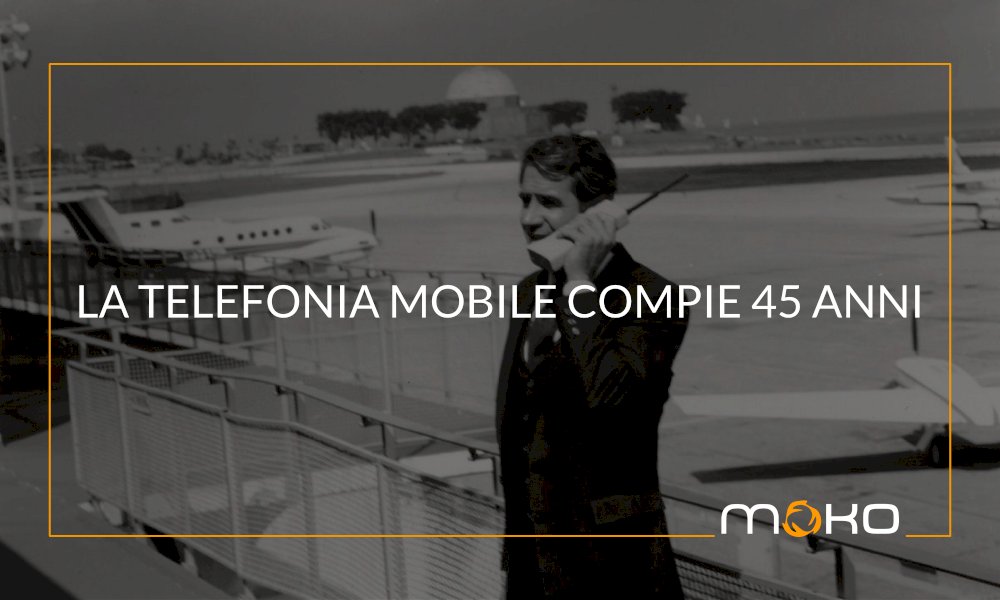
Mobile telephony turns 45.
On April 3, 1973, exactly 45 years ago, something that had never happened before happened on Sixth Avenue in New York: Martin Cooper, a Motorola engineer, made the first mobile phone call in history. The device used to call weighed about one and a half kilos, had a very long antenna, no display, an autonomy of 35 minutes and took about 10 hours to recharge.
The successor to the Cooper prototype is the DynaTac 8000X, which sold for $3,995 at the time, or $9,322 in today's dollars. Figures that make an iPhone appear to be a super low cost device. From the 1980s onwards the mobile phone began a ride towards success, initially contained - it took seven years to reach one million users – then more and more rapidly up to today's impressive numbers which give the first signs of market saturation.
At the time there was obviously no talk of mobile internet and there was no data network designed for the consumer market, capable of guaranteeing access to remote servers from any position covered by the signal. Motorola then made some important steps in the telephony sector, with some iconic models, such as the StarTAC, characterized by the clamshell closure which is immediately became a trendy feature, and the RAZR, the most popular phone at the time thinnest in the world.
In the mobile telephony market there is no it was, of course, only Motorola. Among the most popular names relevant we cannot forget Nokia, which marked its entry onto the market at the end of the 80s, and a few years later. Snake arrived late inside the Nokia 6110 together with two other (less iconic) toys, while in 2000 the 3310 arrived, followed a few years later; late since the announcement of the first terminals with color screens, and the first smartphones with advanced.
In 2008, the first smartphone with an Android device was born, HTC Dream, followed a few years later by late from the first devices with Windows Phone (currently abandoned). In recent years, the sector is preparing to face a new revolution through 5G networks, destined not only to increase the bandwidth for data transfer (beyond Gigabit), but also and above all to allow connection to a very large number of devices per single cell.
We have come a long way since that first phone call...
-thumb_jpg.jpg)
-thumb_jpg.jpg)
-thumb_jpg.jpg)