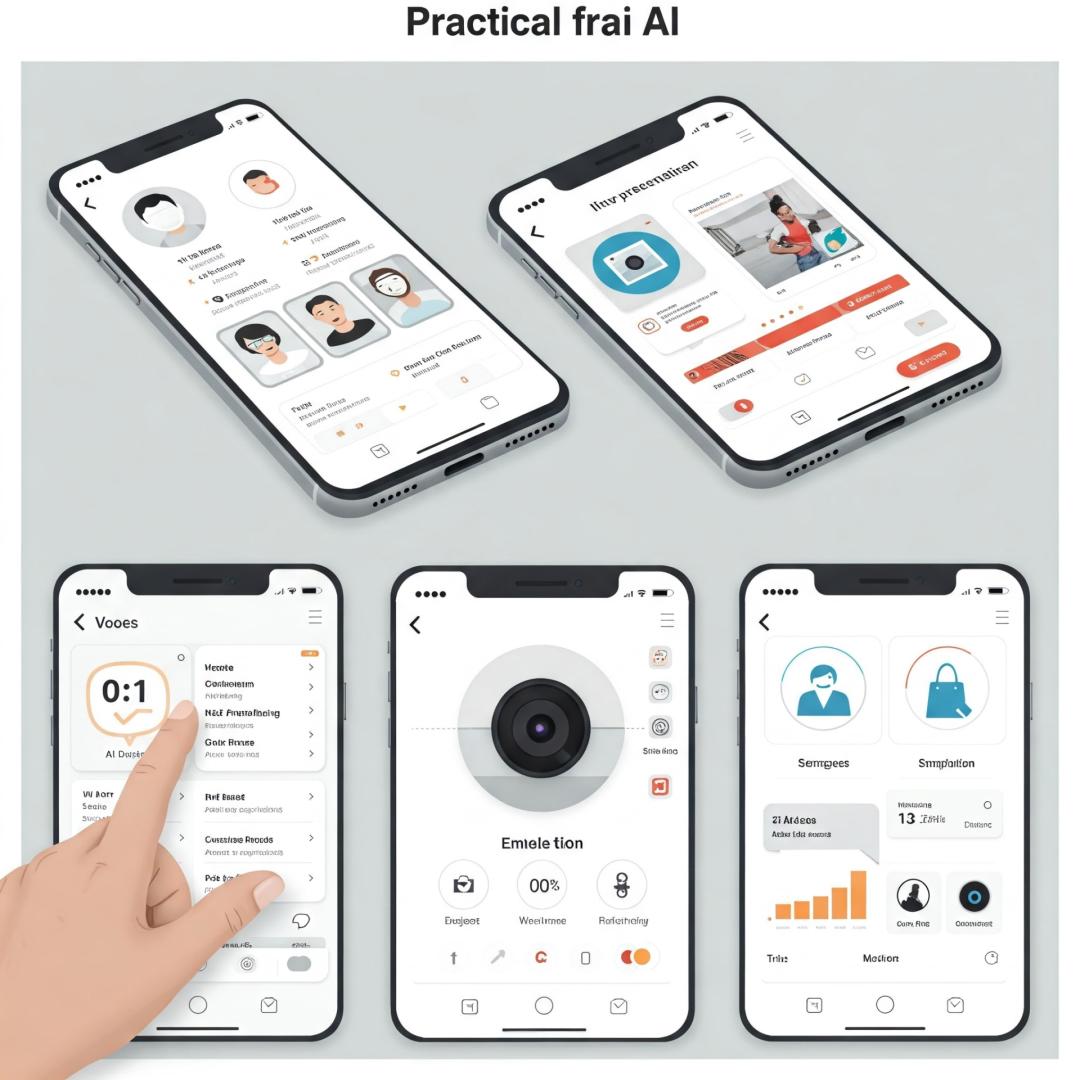
Practical examples on the use of AI in Mobile Apps
Artificial Intelligence in Mobile Apps is definitely a Growth Opportunity for Companies
In recent years, artificial intelligence (AI) has revolutionized the world of mobile apps, bringing significant innovations that improve user experience and increase value for companies. The integration of AI within applications is no longer a futuristic trend, but a concrete strategy to optimize processes, personalize services and increase business.
Why integrate AI into mobile apps?
Adopting AI in mobile apps offers numerous benefits to businesses, including:
- Advanced personalization: AI analyzes user behavior to offer tailored content, increasing engagement and satisfaction.
- Process automation: Thanks to chatbots and virtual assistants, companies can optimize customer service, reducing time and costs.
- Better data analysis: AI algorithms help collect and interpret data for more informed decisions and more effective marketing strategies.
- Security and fraud prevention: Machine learning allows you to identify suspicious behavior and protect sensitive user data.
- Improved user experience: AI enables innovative features such as voice search, facial recognition and suggestions based on personal preferences.
Practical examples of AI in mobile apps
1. E-commerce and shopping
Apps like Amazon and Zalando use AI to suggest personalized products based on users' purchase history and preferences.
2. Automated customer service
Intelligent chatbots and virtual assistants improve customer support in apps like WhatsApp Business and Facebook Messenger by automatically answering frequently asked questions.
3. Fitness and wellness apps
Tools like MyFitnessPal and Fitbit use AI to analyze user data and provide tailored diet and exercise recommendations.
4. Fintech and banking
Banks like Revolut and N26 use AI to detect fraud, optimize financial advice, and improve expense management.
5. Productivity apps
Apps like Microsoft 365 and Notion use AI to suggest actions, organize data, and automate repetitive tasks.
6. Virtualization Apps
The Sephora app uses AI to offer personalized beauty recommendations, allow customers to virtually try on makeup, and provide personalized tutorials.
7. Virtualization Outfit Apps
The ASOS app uses AI to suggest personalized outfits based on users' preferences and provide a more personalized shopping experience.
8. Financial Services Apps
The PayPal app uses AI to detect fraud, personalize the user experience, and offer personalized financial advice.
The Bank of America app uses AI to offer a customer service chatbot, personalize the banking experience, and provide personalized financial information.
9. Entertainment Apps
The Netflix app uses AI to personalize movie and TV recommendations, provide a more immersive viewing experience, and improve streaming quality.
The Spotify app uses AI to personalize music playlists, offer personalized song and artist recommendations, and improve audio quality.
10. Healthcare Apps
Babylon Health’s app uses AI to offer online doctor consultations, provide personalized health advice, and monitor patient symptoms.
Ada Health’s app uses AI to help users identify their symptoms, provide personalized medical information, and connect with doctors.
Medtronic’s app uses AI to monitor patients with chronic conditions, provide personalized health information, and improve disease management.
These are just a few examples of how companies are using AI within their mobile apps to improve user experience, increase operational efficiency, and gain a competitive advantage. AI is quickly becoming a critical technology for companies across all industries, and its applications are continually evolving.

-thumb_jpg.jpg)
-thumb_jpg.jpg)
-thumb_jpg.jpg)