NFC technology: how the Internet of Things improves product usability in marketing
In an increasingly smart is It is necessary to keep up with the times to arouse curiosity, if not amaze, people, and certainly technology and so on. The Internet of Things (IoT) plays a fundamental role in this. In the marketing sphere and especially in the sports sector we try to retain customers with new ideas that can involve them more, expanding the dimension of the products from merely physical to virtual. Let's talk about NFC technology, already used by big brands to intensify the direct relationship with the customer.
NFC is the acronym for “Near Field Communication” – proximity communication – and is based on the transfer of data and information between an NFC tag and an enabled device, which can be a smartphone or a tablet. Tags are usually in the form of stickers, composed of a chip and an antenna that allows interaction with an NFC reader, applicable practically anywhere, allowing communication to be established between object and person. [To find out more we talked about the functioning of this technology here]
A very interesting expedient especially in marketing, NFC turns out to be a good ally of the manufacturer as it is as an added value for the consumer. The connection of the object to a reality Virtually significantly amplifies its range of action, involving the user in an all-round and innovative way. We are talking about a stratagem that is both playful and informative, capable of combating counterfeiting by authenticating the product, also showing its history, characteristics and origin, suggesting in some cases more uses. correct: as for wine, to be combined with the most suitable foods. indicated, or for special items of clothing that require certain treatments.
The benefits for the customer can be summarized in these points:
- Greater involvement with the object, with an expansion of its usability; thanks to access to exclusive content, practical and useful information, and direct connection to activities dedicated;
- Security in owning an authentic and non-counterfeit product, of which it is It is possible to know the history, origin and characteristics;
- Direct interaction with the manufacturing company for any suggestions, reports or recalls.
There are just as many interests that companies benefit from by adopting NFC technology for their products:
- Protection of their own brand from counterfeiting and parallel markets, as the goods are traceable from birth;
- Customer proximity and awareness, which can know better and so support reality corporate;
- Collection of information about consumers, from preferences to needs, so as to be able to improve the level of the products offered.
The examples of products to which it is already this technology has been applied ranging from wine labels to tickets for the world of sport and leisure; just think of the hotels that use cards as room access keys. But it's especially sportswear to adopt NFC, with Nike and Adidas in the front row.
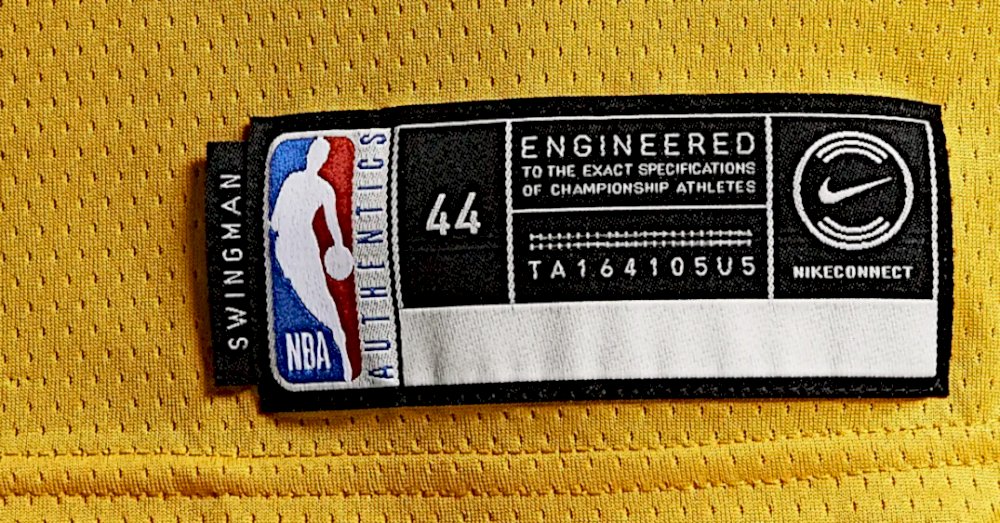
The Nike NBA Connected Jersey were the first uniforms to have an NFC tag incorporated into the label, capable of connecting to the NikeConnect smartphone app, complete with exclusive content dedicated to the player corresponding to the shirt, such as sports data, highlights and gifs to share on social media. In addition to all the information relating to the NBA, it is It is also possible to directly buy tickets for the matches and be updated on the calendar, times and livescore.
Adidas has created the Boost running shoe with an NFC chip in the shape of a lace jewel, placed where the laces pass, which allows the user direct access to the brand's mobile apps and detailed information on the product. Furthermore, thanks to this technology, it is It is possible to receive personalized offers and promotions for the customer and to register the purchase in an immediate and practical way also by the seller. Branded Adidas is also the Telstar 18 ball, chosen for the 2018 World Cup. the first with a technological heart, used not to record data during the match, but to involve users and fans even before the tournament begins. Through the NFC chip placed just under the surface it was possible to access exclusive content by bringing the smartphone close to the ball, also sold in stores.
The application of NFC to products can therefore be an excellent expedient that offers advantages to the customer as much as possible. as in the company, involving both in a qualitatively greater and unique experience.
-thumb_jpg.jpg)
-thumb_jpg.jpg)
-thumb_jpg.jpg)