Your company runs on WhatsApp (and that's not good news)
There is a parallel company to the one you see in official reports. In the official company, processes are linear: the order is entered into the CRM, production picks it up from the MES, logistics ships it from the WMS. Everything is tracked, everything is archived.
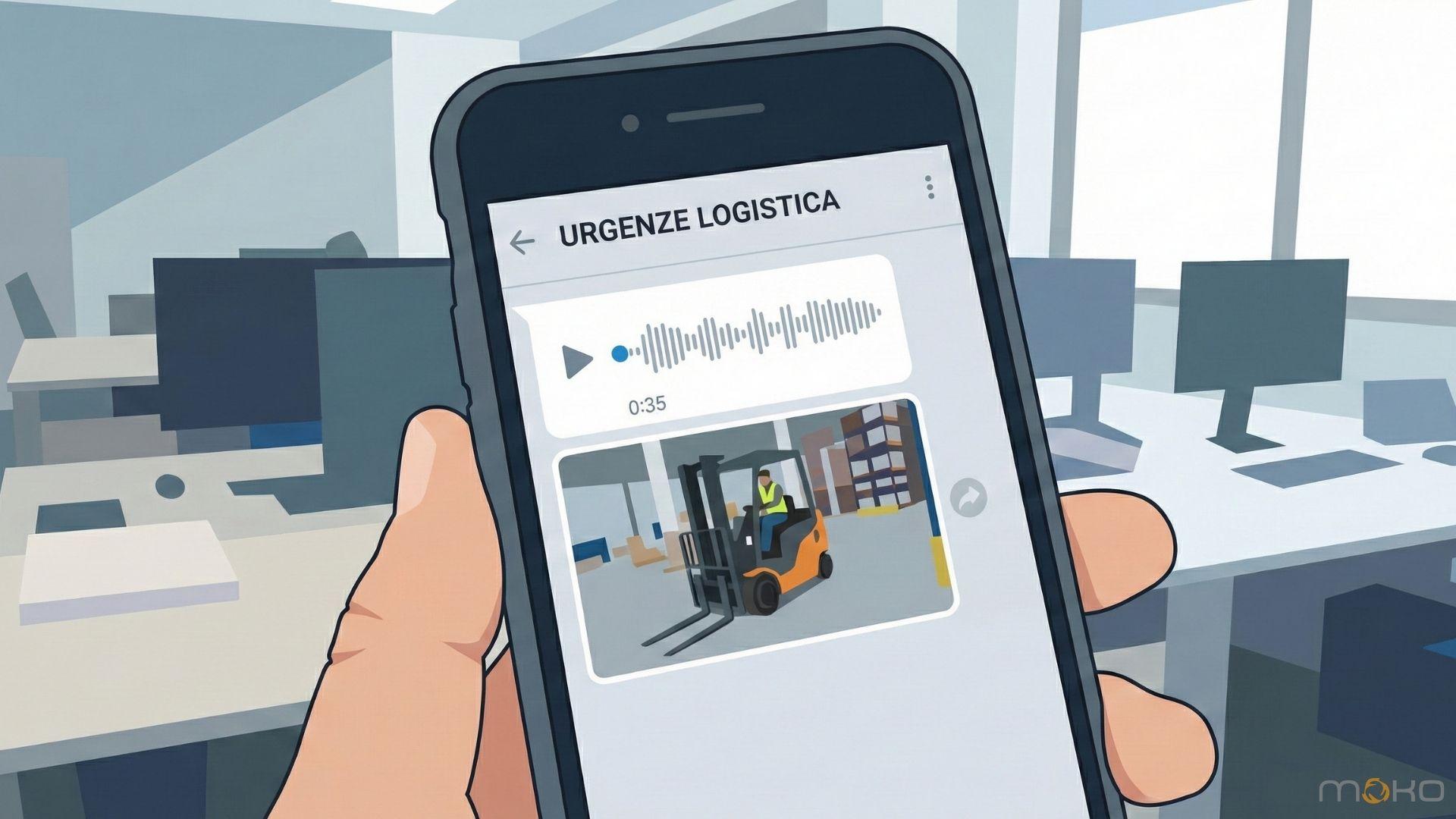
Then there is reality. In reality, the salesperson is with a client and needs to know immediately if that part is available. Accessing the CRM from mobile is a struggle: the VPN is required, the password has expired, the interface doesn't adapt to the screen. What do they do? They open WhatsApp, write in the "Warehouse" group, and ask Mario: "Do we have code X?". Mario replies with a photo of the shelf: "Yes, here it is."
Problem solved in 30 seconds. Maximum efficiency. But for the company, that flow of information never existed.
The paradox of "Shadow IT"
This phenomenon is called Shadow IT. It comprises all the software, apps, and chats that employees use to work without the IT department knowing or approving. The reason it is rampant is not employee negligence. On the contrary: it is their desire to be productive despite company tools.
Humans always seek the path of least resistance. If reporting a fault via the official software takes 12 clicks, 3 screens, and 5 minutes, while sending a photo on WhatsApp takes 10 seconds, WhatsApp will always win.
The risks of a "chatted" company
Although the intent is good, the risks are enormous:
- Data Amnesia: Information remains locked in Mario's phone. If Mario changes jobs or deletes the chat, the history of decisions disappears with him.
- Security and Privacy: Sensitive data, prices, and projects travel on servers not controlled by the company, mixed with vacation photos and soccer team groups.
- Unscalable Processes: You cannot automate a chat. That data will never end up in sales statistics or warehouse forecasts.
The solution: don't ban, compete
Many companies react by trying to play "bad cop": they ban the use of personal phones or block social media. Historically, this is a losing battle. People will always find a way to get around the obstacle if the obstacle prevents them from working well.
The real solution, the one we apply at Moko when designing custom software, is User Experience competition. We must give employees an official tool that is as easy as WhatsApp.
If we create a corporate app where the agent can take a photo, dictate a voice note, and see stock levels with a tap, they will no longer have a reason to use private chat. The goal is to bring the consumer experience (the one we are used to with Instagram, Amazon, or Telegram) inside business processes.
Only when the right tool becomes the most convenient one to use, does the parallel company cease to exist, and the data comes home.

-thumb_jpg.jpg)
-thumb_jpg.jpg)
-thumb_jpg.jpg)